
Where did I begin?
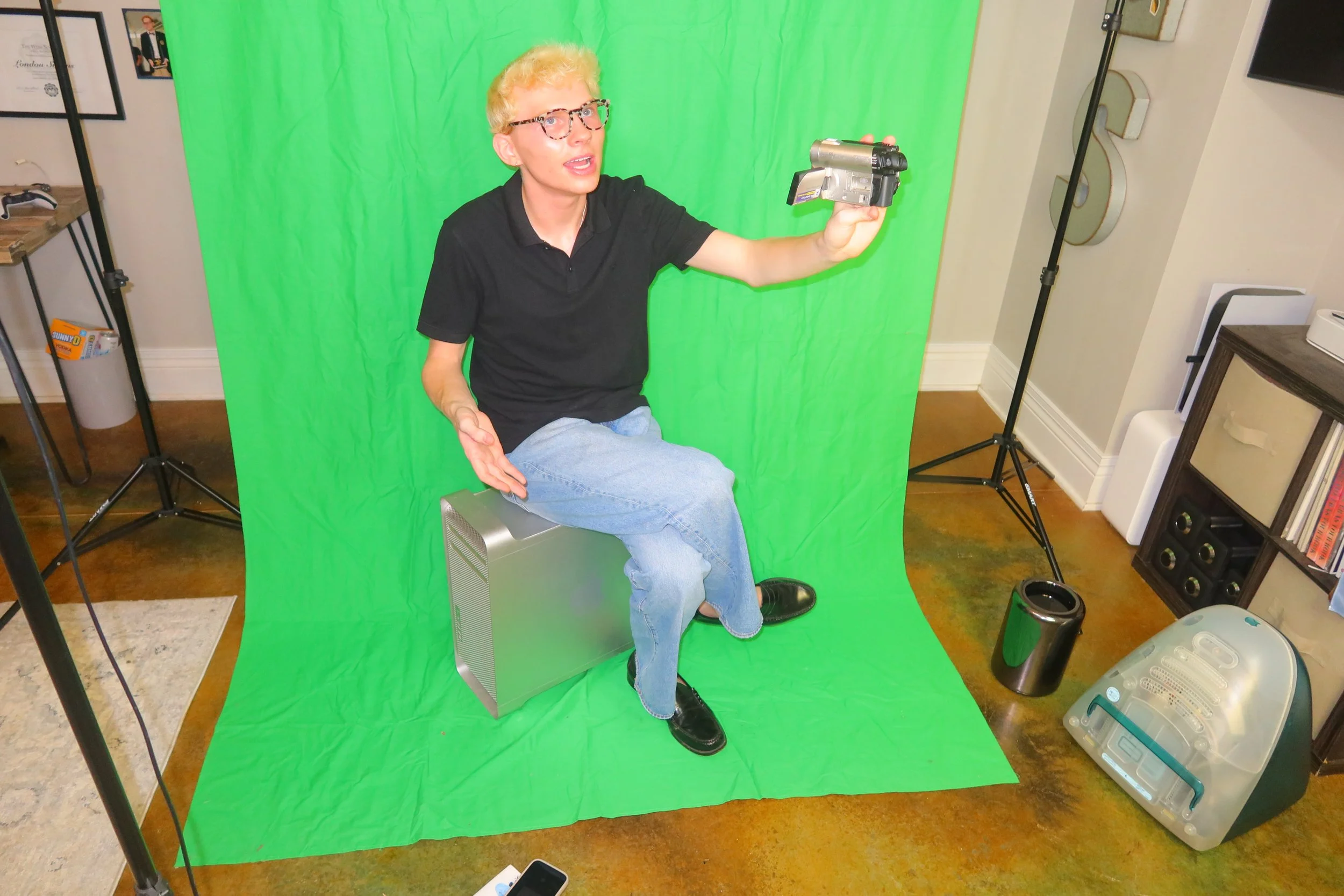
The Creative, 2025.
When I started this course, I was scared. I changed my major at a university six hours from home, witnessed an election where hatred and fear mongering became a success, and my voice as an individual felt more marginalized than ever. I could no longer interact positively with various forms of media. Questions like, “What if I can’t shed light on this topic because it is censored,” and “Am I going to get in trouble for making media centered around queerness and sexual identity?” lingered in the back of my mind every time I placed my hands on a keyboard and started to move my timeline. However, as I reflected on the importance of storytelling and journalism’s mission to be open, inclusive, and honest, I started to grow more comfortable with my topics and, simply, my voice. Howard Reingold explains the importance of media literacy and details the five types: Attention, Participation, Collaboration, Network Awareness, and Critical Consumption. As I became more involved in the media landscape around me, I learned to apply these practices to be a more conscious consumer, and I found that some of the stories I wanted to see had been left untold. Having an understanding of being a conscious consumer, while also being tasked with a Public Service Announcement, Mini Documentary, Motion Graphic, and many other short-form projects, was incredibly impactful since I was not only making this media, but I also knew how to adapt to Dan Gillmor and Howard Rheingold’s arguments surrounding media literacy. I no longer have to fear the landscape; I enter my media into it because the stories I capture demonstrate an active presence in the field of media overall. Digital Storytelling taught me not only to engage with useful media, but also how to create it, whilst passing the mundane checks like “Crap Detection” so many stories fail in today’s society.
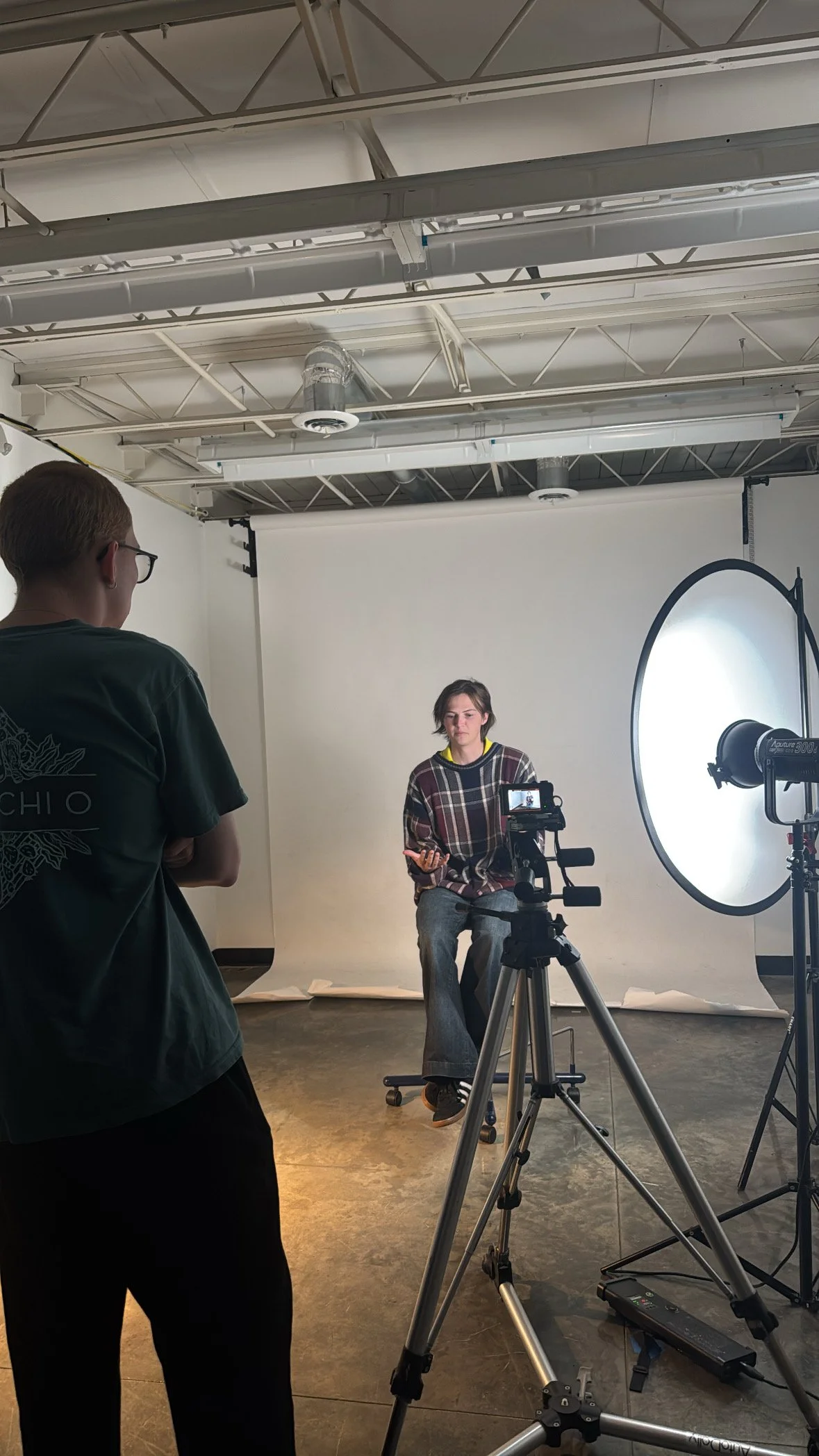
Recording for my PSA, 2025.
How did I adjust my techniques?
As a creative, I’ve used the projects in Digital Storytelling to become an informed storyteller. In a world plagued by fast-paced media, where videos get louder and quicker, and critical information often gets lost, I’ve used techniques like B-roll and narrative structure to keep my media at a necessary pace. Hence, so as not lose my story along the way. Throughout my Public Service Announcement, I used introspective pieces of B-roll of students writing their queer experiences on a glass pane to keep the audience engaged while a sound byte played in the background. I asked myself, “How do I keep my audience engaged during a deep response that showcases the negativity towards queer identities?” and used techniques like filling the frame and putting a frame within a frame to create a successful PSA surrounding labels in the queer world. As my peers reflected on this project, I was praised for the video being “constantly engaging” and never losing one’s attention. Using the shot techniques from Digital Storytelling has helped my stories maintain attention, whereas in the typical world of media, they could often be lost without them. To be a good storyteller in 2025, we have to capture attention quickly and, more importantly, hold it with effects, symbolism, and how we set up a shot. In a world of vertical scrolling, we must adapt the dated horizontal media to match the modern style of today’s creative content.
How did I find my voice?
As I’ve adapted my media, I’ve also adapted myself to find my voice as a storyteller, truly. I have realized that my identity is the culmination of changemakers before me fighting for my rights, and that is something to take pride in. Interacting with so much media for this class has made me proud to reflect on what I can do to enact change across generations. I want to bring light to stories around me that center on one’s identity to undo the negative changes towards multiple communities in today’s political environment. It might be scary, but it is the surest route to preserving not only my voice but also the voices of millions of people archived in history. I’ve married my identity to my ways of storytelling, and that has positioned me to grow into a creator who is comfortable with themselves and proud of the media they create.
Where do I go from here?
Overall, I’ve become a storyteller. I have learned to use programs that seemed daunting at the beginning of my sophomore year; however, I have also developed stronger soft communication skills, making me an asset as a creative. Multiple times throughout this semester, I wanted to use expert opinions for my stories, and even when someone did not reply to an email or acknowledge me whatsoever, I’ve turned around, started from square one, and not only found new ways to create these stories, but also created even better stories in the end. I no longer see “I couldn’t reach this person” as a valid excuse not to make a project; it just requires a little more digging and a larger creative vision to craft a story. Aside from these skills, I’ve also learned the importance of symbolism in my projects to resonate with an audience. As I navigate the job market in New York, I want to create stories that impact people and call for immediate action. With symbolism, that goal becomes a reality. I can pair visuals with my audio to make the message more impactful overall. When I say I want to “dig deeper” in my Mini Documentary, I show myself going to Furman’s Library, looking into the queer zine collection, refining my understanding of Sexual Education, for example, and that was successful according to my peers and my professor. Because of Digital Storytelling, I know how to create impactful media that transcends issues with a project’s storyboarding, and for that, I am incredibly grateful. In the future, I will continue to use these techniques and my newfound voice to garner success as a creative. I am proud of myself and the work I’ve done to shed light on marginalized groups, and I am achieving my goal of becoming a changemaker.
sources & references
https://www.adobe.com/creativecloud/video/discover/video-timeline.html
https://er.educause.edu/articles/2010/10/attention-and-other-21stcentury-social-media-literacies
https://www.youtube.com/watch?v=QM3i2BlFJMo
https://youtube.com/watch?v=6bny2mnRRP0&feature=youtu.be
https://www.adobe.com/uk/creativecloud/animation/discover/motion-graphics.html
https://en.wikipedia.org/wiki/Dan_Gillmor
https://en.wikipedia.org/wiki/Howard_Rheingold
https://www.russellwebster.com/crap-detection-101/
https://www.adobe.com/creativecloud/video/discover/b-roll.html
https://www.nyfa.org/jobs/?_page=1 https://libguides.furman.edu/library/home
https://libguides.furman.edu/special-collections/lgbtq-zine/scope-contents
