
Think about it
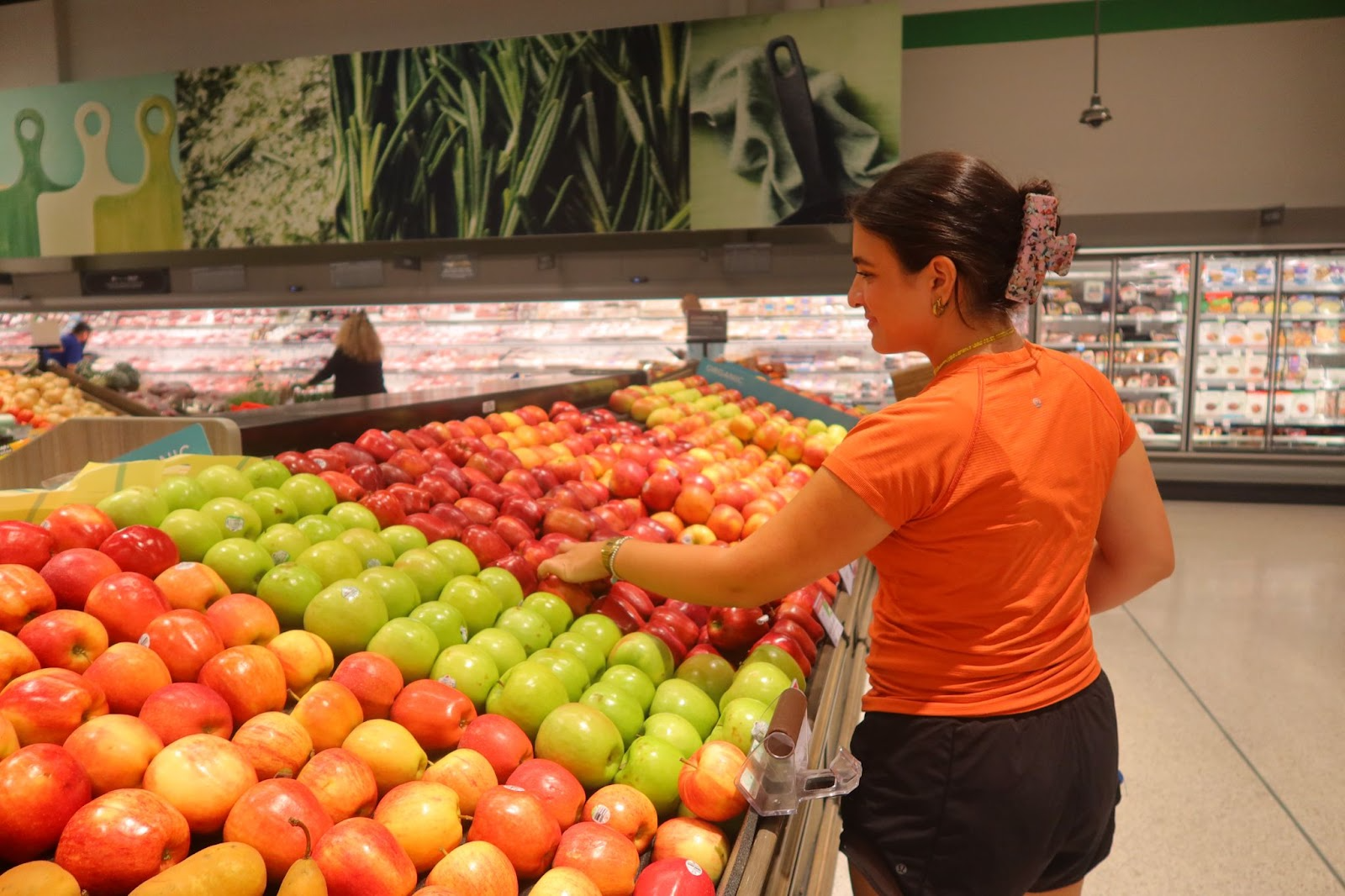
A young woman shops at a luxury grocery outlet, 2025.
When you walk into a grocery store, you likely have a few things on your mind to achieve a successful grocery run: “Do I need a cart?” “What aisle should I go to first?” or “Am I forgetting anything on my list?” Yet what we often forget is how we got to the grocery store or the cost of groceries, as we’re conditioned to meet the price demands of each new day.
the typical reality
This isn’t the reality for many people, though. The mundane questions many people often overlook might go as follows: “Do I have enough money for this?” or “How much gas do I have to get home?” These questions linger in the minds of those who are significantly negatively affected by inflation. Let’s face it, too high an inflation rate isn’t something you or I could say is a “positive” societal ill. In fact, at least 62% percent of Americans, regardless of political party, said that inflation is an extremely “big problem” in the United States today (Pew Research Center, 2024). Inflation is a widespread problem that likely affects you without you realizing it. Over the past two decades, inflation, differing wage rates, and a crumbling housing market have left Americans to fend for themselves with little to no governmental assistance.
The main question
The question, “Why am I paying so much without getting paid more?” continues to linger in the minds of typical Americans whose wages fail to keep pace with inflation. Bankrate.com explains, “The gap between wages and inflation — once as wide as 4.8 percentage points — has been narrowing. But Americans’ paychecks still haven’t fully kept up with the price increases that followed the pandemic” (Bankrate, 2025). Although wages have finally begun to catch up with the rapidly rising inflation rate, progress towards breaking even has slowed significantly, as shown in consumers’ purchasing trends.
local implications
I spoke with Bish Canavati of George’s Truck Stop in Kingstree, South Carolina. Mr. Canavati explained, “Due to inflation and high prices, especially [with] Gas [prices] going up, people drive less, and people don’t buy as much stuff in the store like they used to because everything is higher.” (Canavati, 2025). As an essential worker, Mr. Canavati was forced to work throughout the COVID-19 pandemic, facing financial strife due to a lack of customers and vendors who failed to deliver the necessary supplies. With a lack of customers and sales of luxury goods, even more luxury nowadays, like Winston cigarettes or lottery tickets, Mr. Canavati saw a dramatic decrease in sales of certain items, demonstrating the effects of inflation and stagnant wages over the past five years.
testing the theory
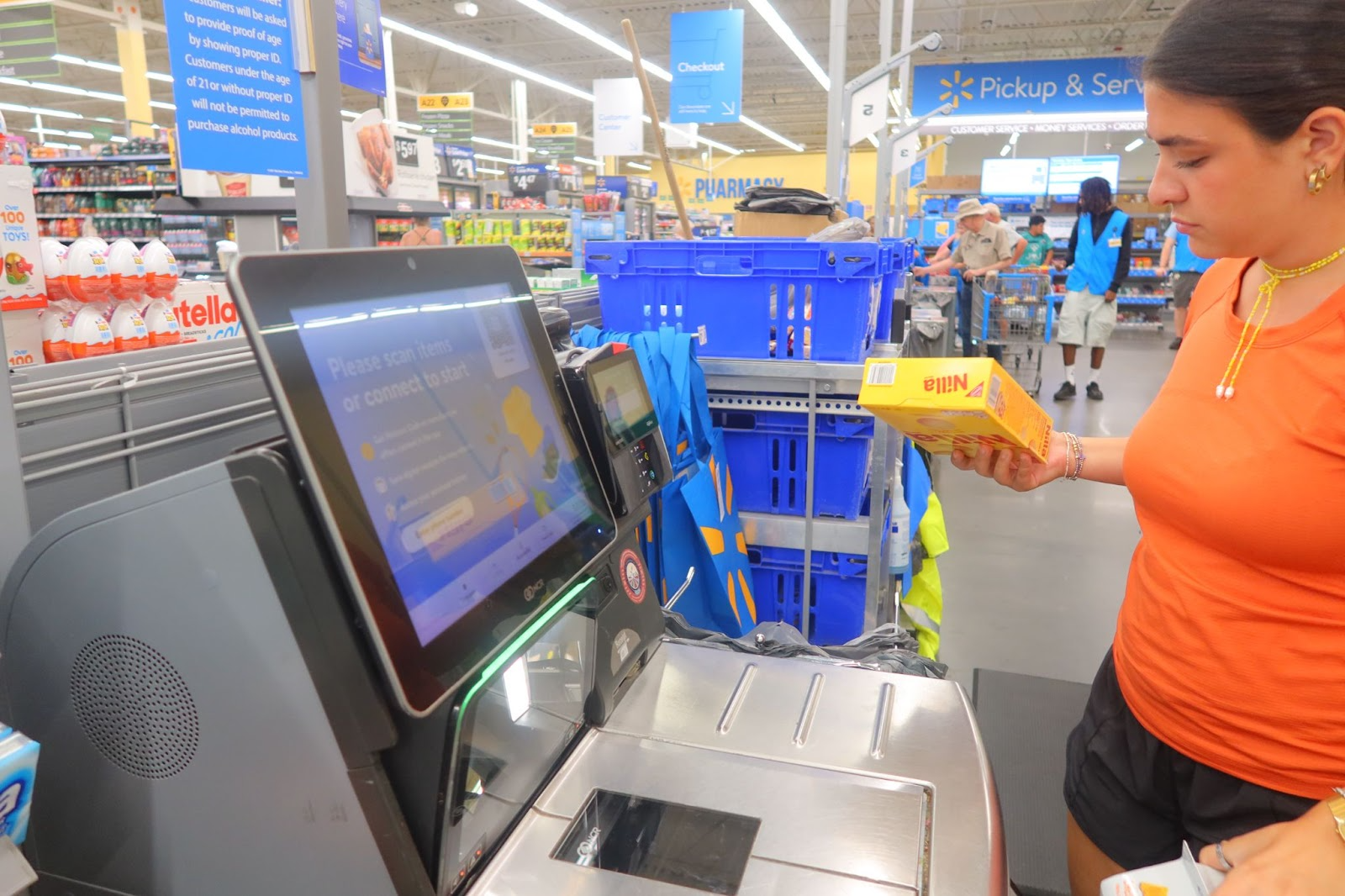
A young woman uses the self-checkout lane at a Walmart Neighborhood Market, 2025.
I visited two different grocery stores, representing a wide range of extremes, one catering to those with higher purchasing power and the other to smaller communities, both located in Greenville, South Carolina. At both stores, I bought a standard-sized box of Nabisco’s Nilla Wafers and a box of Pepperidge Farms’ Goldfish. At the Walmart Neighborhood Market, I spent $13.56, with $4.58 on Nilla Wafers and $8.98 on Goldfish. At Publix, I spent a total of $16.18: $5.39 on Nilla Wafers and $10.79 on Goldfish. Although I bought the same product at both stores, the price differences demonstrate how inflation affects different communities. I thought to myself, as a consumer, “Why is the case? How are those citizens part of communities geared towards wealthier families supposed to afford these higher prices for the same products?” Jeffery C. Fuhrer of Brookings.edu explains, “Those price increases significantly reduce the purchasing power of the already low incomes earned by poorer families… whose spending is more highly concentrated on necessities” (2024). Limited-income families are being forced to stretch themselves too thin. Walmart and Publix have not been negatively impacted by the inflation rates, however. Both large competitors in the grocery outlet industry had over $1 billion in profits last year alone (Publix.com, Walmart.com)
the expert opinion
So what do experts have to say about the current gap between inflation and wage rates? Let’s get a clear answer. I contacted Dr. Kelsey Hample of Furman University’s Economics Department. Dr. Hample is the Chair of Poverty Studies and an Associate Professor of Economics, earning her Ph.D. at North Carolina State University. I asked, “What do you believe could fix the current problem of 'sticky wages?’ Why are companies so apprehensive about making wages livable? And to that, is it even a company’s decision? Will we ever go truly ‘back to normal,’ per se, when it comes to people having enough purchasing power for essentials?” Dr. Hample replied by explaining bargaining power: “ A single employee does not have much bargaining power with her employer to negotiate for higher wages or better benefits. If that employee joins a collective, such as a labor union, the collective will gain more bargaining power because the firm will find it harder to operate without that labor or to replace it. Union membership has declined in the US.” (2025). As an expert in her field of economics, Dr. Hample’s response directly aligns with the responses of other experts. Mark Hamrick, Bankrate’s Senior Economic Analyst, explains, “Until paychecks can close the gap against inflation — and it’s uncertain if they will — people will remain in this catch-up phase… We see the costs of [inflation] across the economy: people struggling to pay down debt while trying to save for retirement and emergencies” (Bankrate, 2025). Overall, both economic experts explain that the current gap between wage and inflation rates continues to drive inflation upwards due to lower purchasing and bargaining power, as well as the United States government's laissez-faire economic policies.
What now?
Overall, stagnant wages and rising inflation, coupled with recent indicators of a recession and recovery from a global pandemic, have a dramatic effect on impoverished individuals. As we continue to navigate these high prices and close the gap between inflation and wage rates, we must remember how we can learn from those moments in our history where others faced even more extreme economic strife. Economic experts are a guiding force, showing us how the problem is occurring and its adverse effects, and how we can combat these extremes. Our necessities will one day no longer be inflated, but it’s essential to understand, as working citizens today, why they are.
Sources & references
https://corporatefinanceinstitute.com/resources/economics/sticky-wage-theory/ https://kelseyhample.com/
https://www.facebook.com/p/Georges-Truck-Stop-and-Restaurant-100069790972644/
https://www.sciencedirect.com/topics/social-sciences/bargaining-power
www.bankrate.com/banking/federal-reserve/wage-to-inflation-index/
www.cbo.gov/system/files/2024-09/60480-Inflation.pdf
www.furman.edu/people/kelsey-hample/
