
#dontlabelme: a PSA on anti-queer rhetoric
what is #dontlabelme?
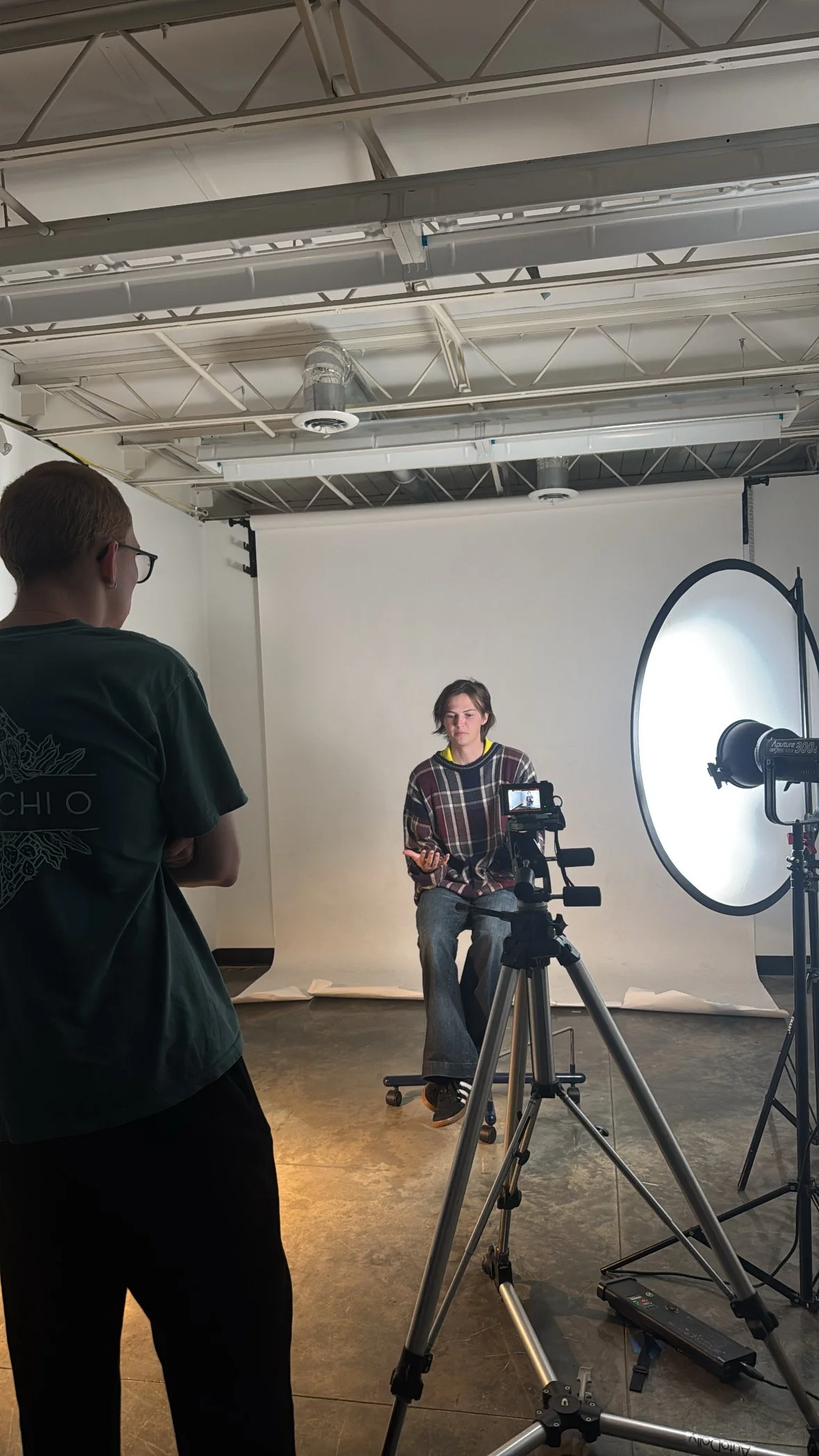
Filming Erik Menkaus, 2025.
Over the past two weeks, I drafted a script and a list of visual ideas for a Public Service Announcement about labels and their often-harmful effects on queer students. Using my background in Women’s, Gender, and Sexuality studies, I found an article that perfectly outlines and defines the current social issues regarding queer identities, written by Lora Vachovska, titled "How Labeling Queer Identity Often Does More Harm Than Good For Global Queer Communities." Vachovska was an undergraduate student who graduated in May 2025. With this article, in tandem with testimonials from queer students at Furman University, I created a Public Service Announcement featuring unique visuals, inquisitive evidence, and a distinct call to action, urging users to shed harmful, stigmatizing labels and to use a hashtag to spread the campaign further.
How did I do it?
Not only did I create this new form of media for my portfolio, but I also learned new forms of storytelling through imagery and the importance of empathy when speaking on deeply rooted, complex topics such as queerness and its labels. Throughout my PSA, I used visuals of someone writing on a glass panel about how labels truly relate to them —and whether they don’t. This was very new to me, as I had to explore Premiere to “transform” the horizontally shot video so the text would be readable. I used a specific storytelling method to show the writer's raw thoughts and feelings, while also showing exactly what they were feeling when writing that labels didn’t define them, for example. In both shots, you can see the students' raw reactions as the words blur in tandem with their faces being unblurred. This gave weight to their reactions and made their presence carry more power than when writing alone. Similarly, I wanted my interviewees to understand that, while I might not use all of their dialogue, I was highly grateful for their time and gave them my undivided attention throughout the interview. I used empathy more than ever to ensure my testimonials were both raw and genuine. When an interviewee asked for a moment to gather their thoughts, I turned the camera off and gave them the space they needed to reflect on some of these harmful moments. Although many people explain to “keep the camera rolling at all times,” it felt extremely disrespectful to go against their wishes regarding their privacy. Not only did this show me that my empathy can help make interviewees feel comfortable, but I also realized that by giving my interviewees undivided respect, I can build better rapport and ensure a more genuine interview overall.
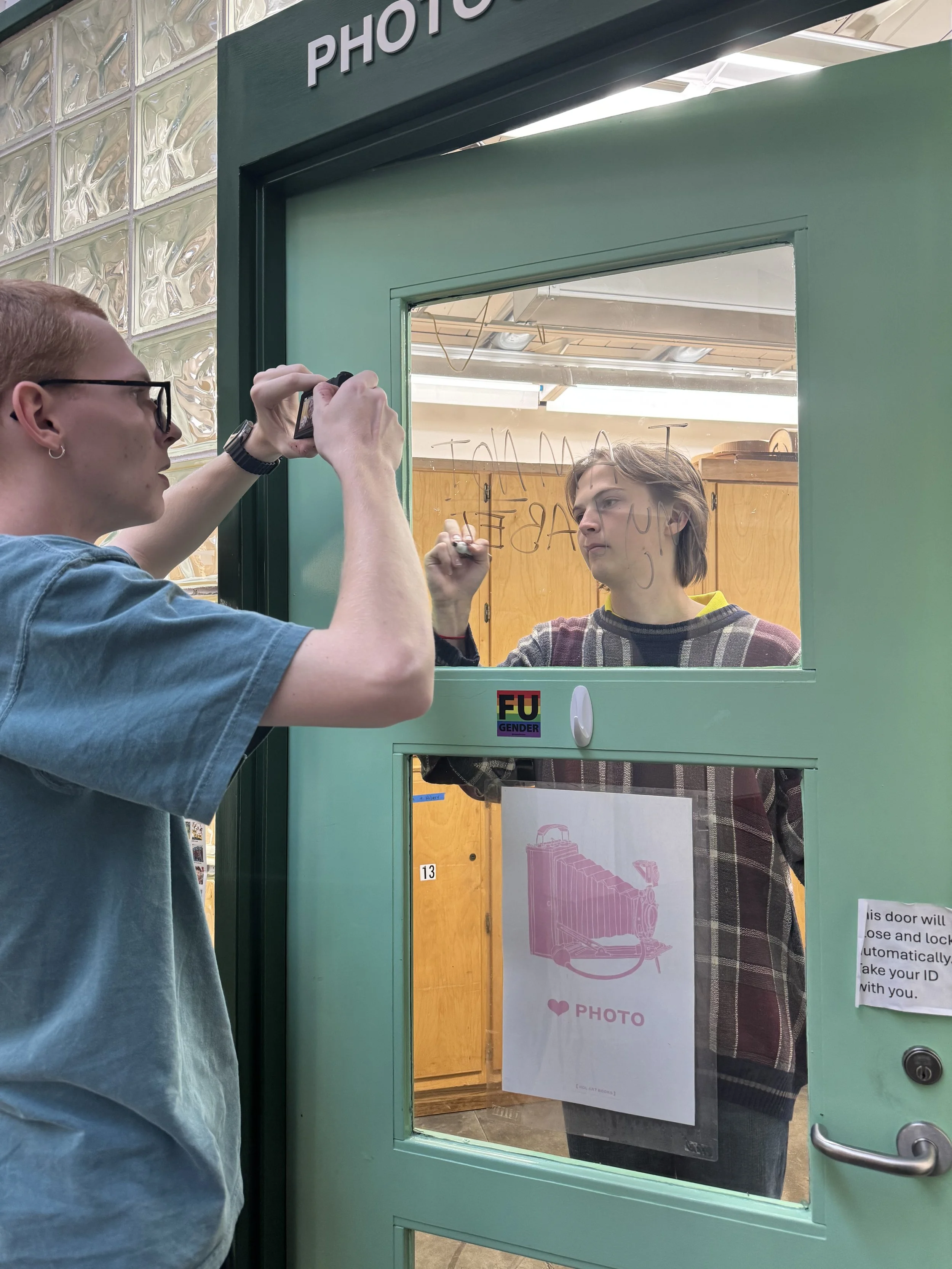
Filming the Imagery Shots with Erik Menkaus, 2025.
What did I learn?
Because I did not use AI in this project at all, aside from Adobe’s transcript utility, the skills I’ve learned—editing, empathy, and rhetorical appeals—to curate a visually driven message will be extremely useful in my career. With the ultimate goals of living in New York and pursuing Graphic Design, I now understand how to use various colors, fonts, and imagery to convey an emotionally informed message to readers or viewers. Using my new Premiere skills, I can create media that accurately reflects the emotions of someone in my video or image. By using pathos, or the specific appeal to emotion, I can create graphics that stick with viewers, making them feel emotionally connected to the graphic or video. With these new skills, I am highly confident in my abilities to create more effective media than before.
Sources & references
https://feminist.stanford.edu/people/lora-vachovska
https://www.adobe.com/products/premiere/
https://ojs.stanford.edu/ojs/index.php/sjfgss/article/download/2632/1605/9952
